
Americans are Concerned about Pharmacy Closures,
and Expect Action to Help Maintain Access
Americans are Concerned about Pharmacy Closures, and Expect Action to Help Maintain Access
of American adults say it is easy to access healthcare services from pharmacies – ranking pharmacies as the most accessible healthcare destinations tested.
of American adults have a favorable opinion of pharmacies, their pharmacist, and pharmacists in general.
of American adults trust their pharmacist when it comes to patient-centered healthcare.
American adults express concern if the following were to close (go out of business),
by the following percentages:
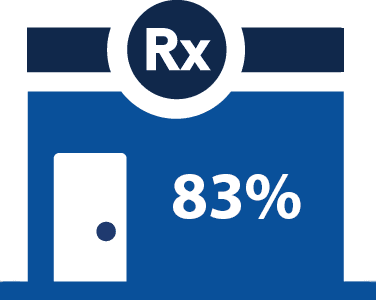
their local pharmacy
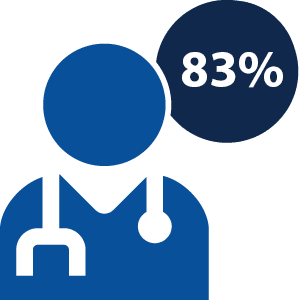
their primary care physician
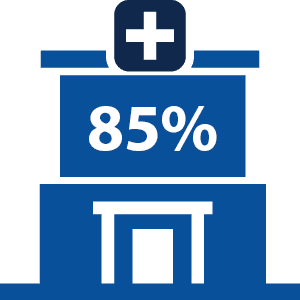
their nearest hospital
(These figures exceed the concern level for the closing of other healthcare destinations including their dentist and the nearest urgent care center – as well as that of other community staples such as their favorite local restaurant, their local hardware store, and the closest gas station.)
This poll was conducted by Morning Consult and commissioned by NACDS between August 2-August 4, 2025 among a sample of 2,201 Adults. The interviews were conducted online and the data were weighted to approximate a target sample of Adults based on age, gender, race, educational attainment, region, gender by age, and race by educational attainment. Results from the full survey have a margin of error of plus or minus 2 percentage points.
Public Support for Pharmacist-Provided Services
See what adults in your state say about changes in public policy to enhance the role of pharmacists in meeting people’s needs for vaccination, testing, and treatment services.
These state-by-state data sheets reflect the results of a nationwide poll conducted online from October 25-30, 2023 among a sample of 10,031 adults. The poll was conducted by Morning Consult and commissioned by NACDS. State-level results are estimated by a multi-level regression and post-stratification (MRP) model weighted by age, race/ethnicity, gender, and educational attainment within each state. Results from the full survey have a margin of error of plus or minus 1 percentage points.